







Introduction: Why Brazing is Necessary in Aerospace Manufacturing.
The aerospace manufacturing sector is continually demanding more material performance in the form of increased temperatures, reduced weights, and more adversarial service conditions. Traditional parts joining techniques like fusion welding normally do not work under such circumstances because of crack formation, deformation, or unacceptable metallurgical reduction.
Brazing technology has thus been developed in terms of a supplementary joining process into an essential manufacturing and repair process, playing a major part in the processing of key aerospace components.
Brazing has also been used in the aviation engine turbine blades, in honeycomb structures, and in the creation of the high-tech ceramic matrix composite, to join materials that otherwise cannot be welded or are challenging to do so.
Aviation Engine Turbine Blades: Material Breakthrough and Precision Repair
The Technical Importance of Turbo Blade Brazing
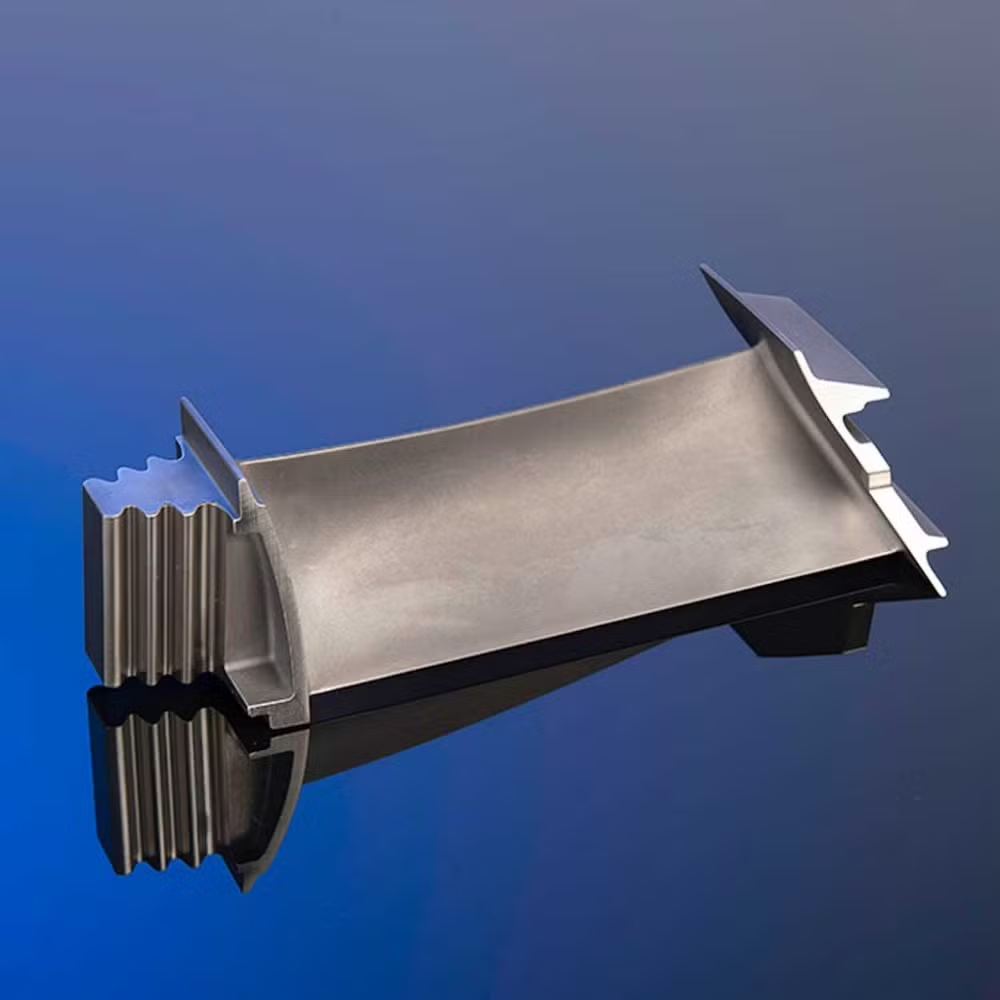
One of the most demanding parts of aviation engines has to do with turbine blades. They have to be operating under extreme thermal and mechanical conditions, and are usually made of nickel-based or cobalt-based superalloys containing high g’ (gamma prime) phase content. Although these alloys have very high temperature strength and creep resistance, they are very susceptible to thermal cracking during the fusion welding process because of their low ductility.
Consequently, brazing can be the only viable way to connect these parts together and repair them. Brazing provides the ability to repair cracks, tip wear, and damage in cooling channels locally without providing the excessive thermal gradients that would have destroyed blade integrity.
Single-Crystal Blades Transient Liquid Phase (TLP) Bonding
In the case of the contemporary single-crystal turbine blade, e.g, the one deployed in high-technology CMSX-series alloys, conventional brazing is no longer effective. The Transient Liquid Phase (TLP) diffusion bonding is increasingly being used by aerospace manufacturers to obtain near-perfect metallurgical continuity.
Here, in the process of TLP bonding, amorphous nickel-based foil filler metals (typically MBF-series alloys) are melted and then solidified isothermally by elemental diffusion. As the diffusion time is long, the braze seam practically vanishes, restoring a continuous single-crystal structure over the joint. This is important in sustaining fatigue resistance and creep at high temperatures.
Innovation (Filler Metal Systems)
Nickel-based brazing filler metals that are traditionally used are known to have boron as a depressant of the melting point. Although it works, diffusion of boron into grain boundaries can cause embrittlement in the long run- this is an unacceptable risk to aerospace engine components.
To counter this, improved filler metal systems on Ni-Cr-Zr or Ni-Cr-Hf chemistries have been invented. Zirconium and hafnium have high interfacial activity with no brittle phase to enhance the toughness of the joint and the long-term reliability under cyclic thermal load.
Cost, Reliability, and Lifecycle Benefits
Brazing repair technologies save a lot in the cost of the maintenance of turbine blades. Well-brazed and diffusion-bonded blades may have a service life well in excess of that of new components; the cost of replacement is kept to a minimum, yet aerospace safety margins are still observed.
Aviation Honeycomb Structures: Lightweighting Structures without Strength Reduction.
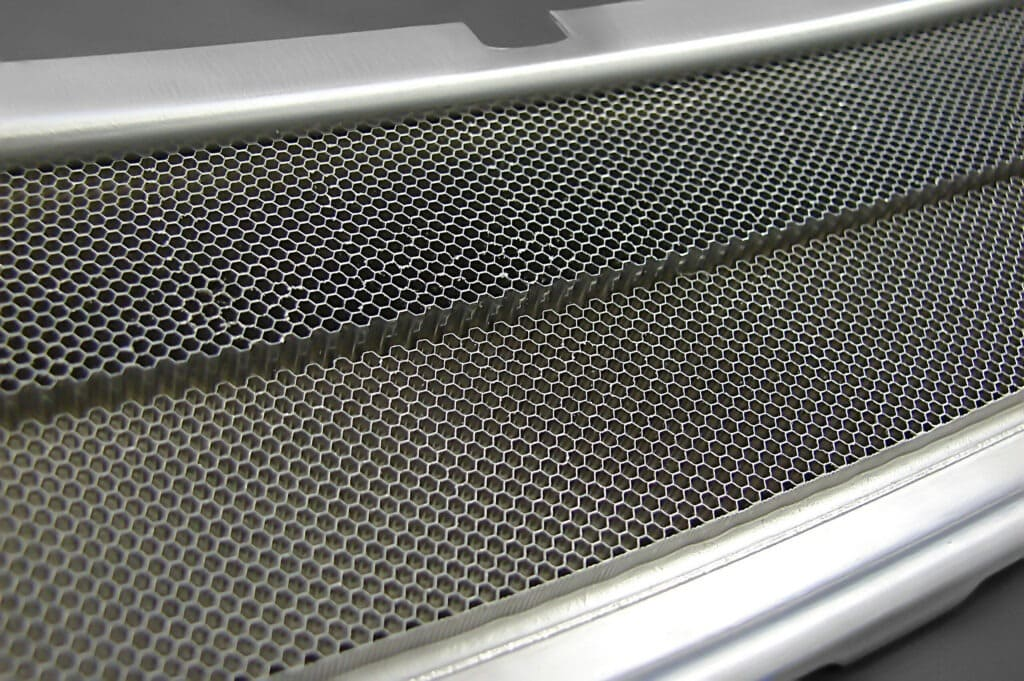
Reasons Why Honeycomb Structures Rely on Brazing.
Such aerospace honeycomb constructions are popular in thrust reversers, engine nacelles, heat shields, acoustic liners, and sealing. These are highly stiff and strong to a very high degree and have a very low weight, a critical attribute to fuel economy and performance.
Honeycomb assemblies are made of a great number of thin-walled metallic foils or sheets that are bonded together in large surface areas. The fusion welding is not viable as it is distorted and prone to burn through. Brazing, on the contrary, offers consistent bonding with little thermal effects.
The Benefits of Amorphous Foil Filler Metals.
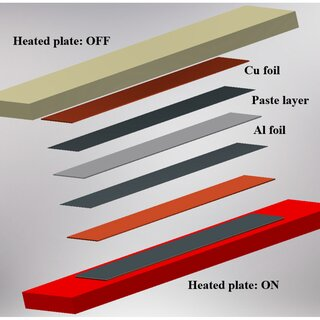
In the case of aerospace honeycomb brazing, the filler metals of the ultra-thin foil type of nickel alloy amorphous, approximately 0.001-0.002 inches thick, are highly sought after. These foils have a number of critical benefits:
- Accurate filler volume, avoiding the build up of material.
- Less erosion of fine-walled base metals.
- Standardized joint formation in big bonded regions.
In contrast to powdered filler metals, amorphous foils do not move during heating; they maintain their geometry in the joint, and the fillers are not lost or blocked in honeycomb cells.
The Structural Integrity and Quality Assurance
Brazed honeycomb constructions are required to satisfy severe aerospace requirements on strength, fatigue, and thermal stability. Repeatability and blemish-free joints with high structural integrity over service life are achieved through controlled heating profiles and equal conditions of atmosphere, which are aided by high-precision brazing furnaces.
Integration of Aerospace Systems Ceramic Matrix Composites (CMCs).
The Challenge of Joining CMCs to Metals
Increased use of ceramic matrix composites (CMCs), including carbon-carbon (C-C) and silicon carbide-silicon carbide (SiC-SiC), is made in more advanced aerospace and spacecraft components. The materials offer superior thermal performance and low density, thus best applied in exhaust nozzles, thermal protection systems, and hypersonic usage.
Nevertheless, conventional welding techniques cannot be applied to the metallic structures that CMCs are to be bonded to because of the basic differences in thermal expansion, bonding, and chemical stability.
Active Brazing as the Key Solution.
The guiding principle in the incorporation of CMCs with either titanium alloys or nickel based superalloys is brazing, namely active metal brazing. The most common active filler metals are based on Ag-Cu-Ti systems and include reactive elements that react to form stable interfacial compounds at the ceramic surface.
It is a metallurgical bonding that allows structurally stable joints with the capability of sustaining extreme thermal gradients and mechanical loads. The resulting assemblies are a combination of the finest characteristics of ceramics and metals, increasing the scope of design opportunities of next-generation aerospace systems.
Application in Aerospace of the Role of Industrial Brazing Equipment.
The attainment of aerospace-grade brazed joints does not only have to do with the filler metal. Thirdly, accurate thermal regulation, purity of the atmosphere, and repeatability of process parameters are essential as well. The stability needed in diffusion bonding, honeycomb brazing, and active ceramic-metal joining is found in industrial vacuum and controlled-atmosphere brazing systems, including those found in the design of 도도 머신.
The uniformity in temperature and programmable thermal cycles means that brazing becomes a step-free process, not a manual craft, but a metallurgical process that can be repeated and is acceptable in the production of high-reliability aerospace products.
Conclusion: Brazing as a Critical Aerospace Metallurgical Science.
When the aerospace industry is the epitome of industrial engineering, then brazing technology would be its precision fastener on the cellular level. Now no longer a mere adhesion process, modern brazing is a process that supports diffusion-based material integration, and thus, lets alloys and composites otherwise incompatible with adhesion become structures on their own.
Aerospace applications have also made brazing a very strict science through turbine blade repair, lightweight honeycomb assemblies as well as ceramic-metal assembly and it is an evolving science, with more sophisticated materials and high-performance manufacturing systems.
자주 묻는 질문
1. Why is brazing preferred over welding for aerospace components?
Brazing is preferred here because many of the materials that are used in the aerospace industry, such as the nickel superalloys and the ceramic matrix composites, either have low ductility or do not possess suitable thermal properties to perform fusion welding.
2. Why are amorphous foils considered an ideal choice for aerospace honeycomb cores?
Amorphous foils have the capability of exact thickness control, equal melting rates, and known diffusion rates. It helps to prevent deposition of excessive fillers, prevents honeycomb wall degradation due to erosion, and maintains equal strength of joints.
3. What is the process of bonding ceramic matrix composites with metal?
CMCs are bonded to metals by active brazing, which involves the use of brazing metals with reactive elements like titanium. These elements show high reactivity with ceramic materials to form interfacial compounds with them, allowing for metallurgical bonding of metals with CMCs, which cannot otherwise be bonded through welding processes.