












| Power | Three-phase 380v |
| System Power Supply | AC 220 |
| Machine Power Consumption | 1.5 KW |
| Turning Diameter | 600-800mm or customize |
| Operating Table Height | 800-1000mm or customize |
| Independent Gas Loop | 2-4 |
| The Number Of Working Procedure | 4-12 |
| Work Efficiency | 5-10 Pic/min or customize |
| The Length Of Product Range | 120-400 mm or customize |
| The Shape Size | 1800*1850*2300mm |
| Weight | 1100Kg |
1. Customized design
Provide customized solutions according to the drawings or products provided by customers
2. Brazing machine production
Production will start after the customer confirms the plan.
3. Inspection before delivery
After production is completed, trial production and testing will be arranged before shipment.
4. Packing and Shipping
We have rich experience and perfect packaging to ensure the safety of customers’ products during transportation.
5. Customer trial production
After the customer receives the brazing machine, we will cooperate with the customer to provide training services so that the customer can install and use the brazing machine without any problems.
6. After-sales service
Dodo Machine service technicians are just a phone call or email away. Our technicians can help resolve any issues. Need spare parts? No problem, many parts are in stock, others arrive within a week.
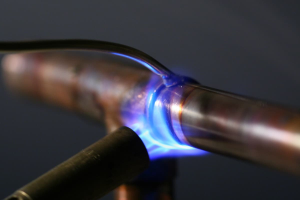 ( figure-1 Copper Branch Pipe Brazing)
1. What is a copper branch pipe?
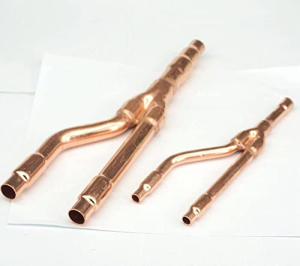
A copper branch pipe is a type of piping component often found in air conditioning and refrigeration setups. It serves the purpose of channeling fluid, to areas or fixtures within a system. These pipes are typically made of copper, known for its conductivity, thermal properties and resistance to corrosion.
The key features of copper branch pipes include their inlet and multiple outlets design enabling distribution of fluids in different parts of a system. They are commonly used in central air conditioning VRV systems, refrigeration pipelines and various fluid distribution setups.
Copper branch pipes come in sizes and configurations to fit the needs of piping systems. Copper is favored for these pipes due to its nature, thermal conductivity strength at low temperatures and ease of processing and connecting. These qualities make copper branch pipes suitable for applications, like tap water lines, heating systems and refrigeration installations.
2. What is copper branch pipe brazing?
Copper branch pipe brazing is a technique used to connect copper pipes by melting metal into the joint. This method is favored for its durability and robustness making it well suited for plumbing and HVAC systems. The metal filler typically requires a melting point higher, than 840°F (450°C) setting brazing from soldering.
3. Why do people prefer brazing over soldering for copper pipes? What sets them apart?
 (figure-2 brazing copper pipe)
Brazing is often chosen over soldering, for copper pipes because of some differences that distinguish them. One major factor is the strength and durability of brazed joints in comparison to soldered joints. Brazing involves using a filler metal with a melting point that soldering, above 840°F. This higher melting point results in a bond that can handle temperatures and pressures making it suitable for applications where strength and reliability are essential.
When it comes to the process brazing necessitates temperatures to melt the filler metal enhancing the strength of the bond and increasing durability. Conversely soldering melts the filler metal at temperatures below 840°F. The lower melting point in soldering might not offer the level of strength and durability as brazing in situations where joints need to endure high pressure and temperature conditions.
Furthermore brazing finds use in industries like plumbing, HVAC systems and automotive applications where joints face challenging operating conditions. The ability of brazed joints to withstand these demanding environments makes them a preferred option over soldered joints, in scenarios.
In scenarios where the joints integrity’s crucial brazing is the favored technique, for connecting copper pipes due to its exceptional strength, durability and resistance, to extreme temperatures and pressures.
4. What materials are needed for copper pipe brazing?
When it comes to brazing copper pipes you’ll require copper pipes themselves a brazing filler metal typically containing silver or phosphorus flux for cleaning and preparing the joint a heat source like an oxy acetylene torch, well as safety gear such as gloves and goggles. Proper preparation tools like wire brushes and pipe cutters are also essential.
Preparing copper pipes for brazing involves cleaning the ends of the pipes and fittings to eliminate any oxidation, dirt or grease. This can be achieved using a wire brush or sandpaper. Applying flux to the cleaned surfaces helps prevent oxidation during heating and ensures flow of the filler metal into the joint.
Flux plays a role, in brazing by being applied to the surfaces of copper pipes before starting the process. It aids in removing oxides and preventing oxidation during heating.
To ensure a surface for the filler metal to stick to creating a leak free connection.
5. What kind of filler metal is used in copper brazing?
Common options, for copper brazing filler metals include alloys that contain silver, phosphorus and copper. Silver based alloys are favored for their flow properties and sturdy joints. Phosphorus copper alloys are also utilized when joining copper pipes without requiring flux. Whether flux is needed is related to whether there is an oxide layer on the surface and whether flux is needed to increase fluidity, and has nothing to do with the material of the flux itself.
The advantage of large-scale application of phosphor copper solder is low cost, but compared with silver-based solder, it has low fluidity and requires more precise temperature control, but this can be easily achieved.
6. How is heat applied during the brazing process?
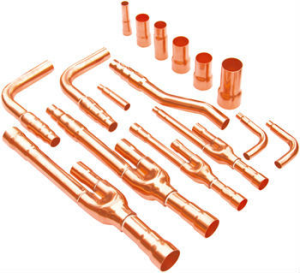 (figure-3 copper brazing applications)
Heat is administered using a torch, an oxy acetylene torch that generates high temperatures for brazing. It’s essential to distribute heat around the joint to ensure uniform melting and flow of the filler metal into the joint. Overheating should be avoided as it can harm the pipes.
7. What safety measures should be observed during brazing?
Safety precautions involve wearing gear, like gloves, goggles and sleeved attire to shield against burns and sparks. Adequate ventilation must be maintained to prevent inhaling fumes with a fire extinguisher kept nearby as a measure. Additionally working in an environment of obstructions is crucial to prevent mishaps.
8. Is it possible to braze copper pipes without using flux?
When brazing copper pipes using phosphorus copper filler metals can join them without flux. It is usually better to use flux for a joint and stronger adhesion of the filler metal especially when
Whether flux is needed is related to whether there is an oxide layer on the surface and whether flux is needed to increase fluidity, and has nothing to do with the material of the flux itself.
working with different metals or less, than ideal conditions.
9. What are common issues and safety precautions faced during copper pipe brazing?
Common challenges during copper pipe brazing include preparation, improper heating, excessive heat and incorrect flux application. These issues may result in joints, leaks or pipe damage. Adhering to techniques and preparation procedures can help prevent these issues.
Prioritizing safety is essential when brazing copper pipes. Following safety protocols to avoid accidents and injuries is crucial. Wearing gear such as heat gloves safety glasses and a fire resistant apron is vital for protection against burns, eye injuries and fume exposure.
Ensuring ventilation in the workspace helps minimize inhalation of brazing fumes. Keeping a fire extinguisher nearby as a measure in case of emergencies is also advisable. Handling materials carefully using tools, like tongs or pliers when working with pipes and brazing rods further reduces the risk of burns or accidents.
By prioritizing safety measures and following the recommended safety protocols professionals can create a work environment, for carrying out brazing tasks.
10. How can you check the strength of a brazed joint?
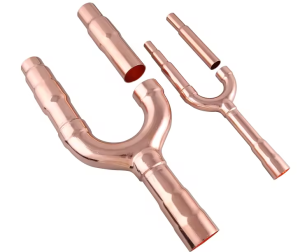 ( figure-4 brazed joint strength)
To determine the strength of a brazed connection various methods can be utilized, each, with its benefits and practical uses;
Testing Methods that Involve Damage
- Tensile and Shear Testing.
These evaluations gauge how well the joint holds up under pulling or sliding forces. They are typically conducted during the testing phase than for production components. Silver braze alloys usually have strengths ranging from 40,000 to 70,000 psi while joints using copper based alloys often break within the base metal itself at the coppers softened strength.
- Fatigue Testing. This approach examines how well the joint endures repeated loading over time which’s crucial for parts experiencing stress.
- Impact Testing. This assesses how energy the joint can absorb and its ability to withstand loads without breaking.
- Torsion Testing. Particularly valuable for evaluating joints in production components like studs or screws to see how they handle twisting forces.
Non Damaging Testing
- Visual Inspection. Examining the joint for any flaws like air pockets, cracks or improperly sized fillets.
- Ultrasonic Inspection. This technique uses waves to identify imperfections, within the structure.
The echo strength, at the braze spot is monitored to determine quality; a made joint will result in a subtle reflection while a flawed joint, with gaps will exhibit a more pronounced reflection.
Leak testing involves checking the integrity of the joint by applying pressure or using bubble tests to detect any leaks.
Peel testing assesses lap joints by exerting force to separate one component from another revealing the bonds quality.
Metallographic examination entails analysis to evaluate quality, including porosity and filler metal distribution.
11. Is it possible to braze copper pipes in an environment?
Brazing should ideally be done in a setting to ensure good adhesion of the filler metal. Moisture can disrupt the brazing process resulting in joints. If brazing in an environment cannot be avoided, make sure to dry and preheat the pipes before applying the filler metal.
12. How does brazing impact the characteristics of copper pipes?
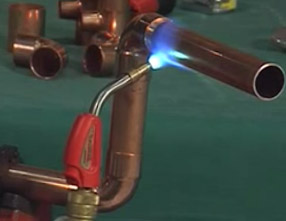 (figure-5 impact of brazing on copper pipe)
Brazing may cause changes in the properties of copper pipes around the joint where heat is applied. However when performed correctly these changes are minimal. The overall strength and durability of the pipes are preserved. Proper cooling and handling after brazing are crucial, for maintaining the integrity of the pipe.
In order to prevent internal oxidation of the branch pipe, nitrogen is required to be introduced during brazing. This is because if there are oxides when the refrigerant passes through the inside of the pipe, it will cause damage to the compressor, which is a very serious quality problem.
13. What benefits come with using silver based filler metals in brazing?
Silver based filler metals provide excellent flow characteristics create joints and offer resistance to corrosion. They are versatile. Can be utilized for joining metals making them well suited for intricate plumbing and HVAC systems. While silver based alloys may be more expensive their superior performance justifies the cost.
14. How should you maintain brazing equipment?
To keep brazing equipment, in condition, regular cleaning and inspection of the torch, hoses and regulators are necessary. It is important to ensure that the torch tip is clear of any debris and that the hoses are free from damage or leaks. Proper storage of filler metals and flux is also crucial to prevent contamination and maintain performance.
15. What advantages does copper pipe brazing have over soldering?
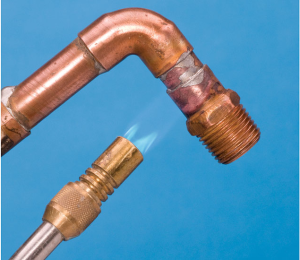 (figure-6 Advantages of copper pipe brazing)
Copper pipe brazing offers advantages over soldering making it a preferred method in applications. Some key benefits include;
Joints; Brazing yields joints compared to soldering due to the higher temperatures involved resulting in a more durable bond suitable for systems under high pressure or stress.
Temperature Resistance; Brazed joints can endure temperatures, than soldered joints.
Using brazing is a choice, for situations where pipes will encounter temperatures like in HVAC systems.
Brazing is particularly effective for joining types of metals creating strong bonds that soldering may not achieve.
The robust joints formed through brazing are less likely to experience leaks, which is crucial in plumbing and HVAC systems where leak prevention is essential.
Brazed joints are more durable. Withstand stress better than soldered joints making them ideal for applications with vibrations or movement.
Brazing often involves using filler metals that offer corrosion resistance compared to those used in soldering prolonging the lifespan of the joints in harsh environments.
Cleaner joints are typically achieved through brazing as it results in residue compared to soldering due to temperatures burning off impurities for a neater finish.
The strength and durability of brazed joints reduce the chances of failure over time ensuring reliability, in systems where joint failure could have serious consequences.
Versatility;
Brazing offers a range of applications as it can connect metals and endure high temperatures and pressures.
Opting for brazing instead of soldering leads to stronger more long lasting and leak resistant connections making it a preferred method, for many plumbing and HVAC tasks.
16. Can copper pipes be brazed in spaces? How important is ventilation during copper pipe brazing?
Brazing copper pipes in confined areas comes with its set of challenges. It can be done successfully with the techniques and tools. When working in spots like crevices or corners using equipment is crucial to simplify the brazing process. Using a torch tip ensures heat control for heating of the joint without harming components. Additionally angled brazing rods help maneuver through angles and corners allowing the filler metal to flow smoothly into the joint. By adapting to limitations and employing techniques, like hand movements and strategic torch positioning brazing in cramped spaces can be done accurately and efficiently resulting in joints that meet high quality standards.