









Branch pipe, also called central air-conditioning branch pipe. It is a pipe with one input but multiple outputs. It is mainly used in the pipeline installation of the central air-conditioning VRV system. Its function is to divert the refrigerant in the pipeline to the indoor unit in the central air-conditioning multi-connection installation system to play the role of diversion.
The branch pipe connects the connecting pipe of the host machine and multiple terminal devices (evaporators), and is divided into a gas pipe and a liquid pipe. The caliber of the air pipe is usually thicker than that of the liquid pipe. The type selection of the branch pipe is determined according to the capacity of the indoor unit connected behind each branch pipe.
Selection criteria for manifolds
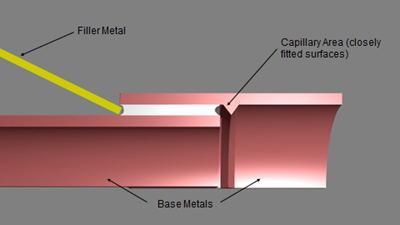
The branch pipe is processed and welded with copper pipe, which is also very important for its selection. Such as R410A refrigerant, this refrigerant is more environmentally friendly than traditional refrigerants, but its pressure is also higher than traditional refrigerants. If it is not selected properly, it may leak and burst after installation. Cause a lot of losses to the refrigeration system, causing unnecessary trouble
Material requirements for branch pipes:
R410A special copper tubes should be used now, and R410A copper tubes are stronger in compressive capacity than ordinary copper tubes.
The caliber below 22.3 uses 1mm thick copper pipe, the diameter below 31.8 uses 1.3mm copper pipe, and the diameter above 35 is best to use 1.5mm copper pipe.
The branch pipe should have uniform, regular, smooth welds, no false welding, and no desoldering.
Welding installation will leave a lot of oxides, so the system should be welded with nitrogen, the pipe wall is clean, there is no black spot on the inner wall, and there is no impurity.
Installation of branch pipes
requires attention! The branch pipe cannot be replaced by a tee, and the connection method cannot be reversed. Before installation, check whether the diameter of the copper pipe is consistent with the diameter of the required branch pipe.
There are two arrangements of branch pipes:
When installed horizontally, the three ports are required to be on the same horizontal plane, and the included angle should not be greater than 15°;
When installed vertically, it can be up or down, and it is necessary to ensure that the three ports are on the same elevation, but no inclination is allowed;
01. Before installation
Before installation, check whether the diameter of the copper pipe is the same as that of the required branch pipe. If the size of the copper pipe at the installation site is different from the diameter of the required branch pipe, use a cutter to cut off the different parts. Note: choose Cut off at the same caliber size.
02. Place
When installing the branch pipe, try to make the branch pipe vertical or horizontal. When placed horizontally, the inclination deviation is ±10°.
When installed vertically: it can be up or down. Make sure that the three ports are on the same facade, and no inclination is allowed.
03. Precautions
For the branch pipe multi-channel system, each pipe should be labeled so that the connecting pipe after the branch corresponds to the indoor unit to prevent wrong connections.
04. Purging
Purging is to use nitrogen pressure to remove impurities in the tube. (Mainly dust, moisture, oxides caused by welding, etc.)
Precautions for branch pipe installation
The branch pipe is installed horizontally. During installation, the following items should be paid attention to:
1. The distance between the front and back bends is too close:
If the distance between the branch pipe and its front and rear bends is too close, it will also affect the normal flow of refrigerant flowing here, and affect the cooling effect of the downstream indoor unit. Therefore, it is necessary to ensure that the distance between the branch pipe and its front and rear bends is more than 500mm. Similarly, the distance between the two elbows (bending points) should also be guaranteed to be more than 500mm.
The distance between the branch pipe and the branch pipe should be more than 1000mm; otherwise, it is easy to cause refrigerant deviation and refrigerant flow noise.
2. The pipeline direction is too complicated:
On the first floor of the villa, the direction of the divergence from the pipe well to the supervisor is too complicated. Some pipes even go to one end and then turn back again. This wastes materials on the one hand, and more importantly increases the resistance of the pipes, reducing the cooling capacity of the indoor unit. ; Some pipelines are laid in layers, which is not conducive to the normal oil return of the system, which will leave hidden dangers to the normal operation of the main engine. Regarding the design and laying of pipelines, please follow the principle of “keep the length of the pipeline as short as possible and use as few elbows as possible”, otherwise it will affect the normal operation of the unit in the future, and even damage the unit, so it must be changed.
3. The outlet pipe does not retain a certain straight line segment:
We often find this problem at the construction site: the pipeline branched out from the branch pipe does not retain a certain straight pipe section, but bends immediately after branching out, which will have a great impact on the indoor unit behind the branch pipe.
4. Welding of branch pipes:
In actual engineering maintenance, we found that the last two A and B of a set of 12 multi-connected indoor units, when A is turned on, the cooling effect of B is poor, and if A is not turned on, B is good, so we put the last one The branch pipe and the pipeline connecting B were all removed, and the suspicious pipeline was cut to find the situation. After shortening the insertion depth, the unit operated normally.